SDA Vacancy Rates Explained: Why So Many Homes Sit Empty
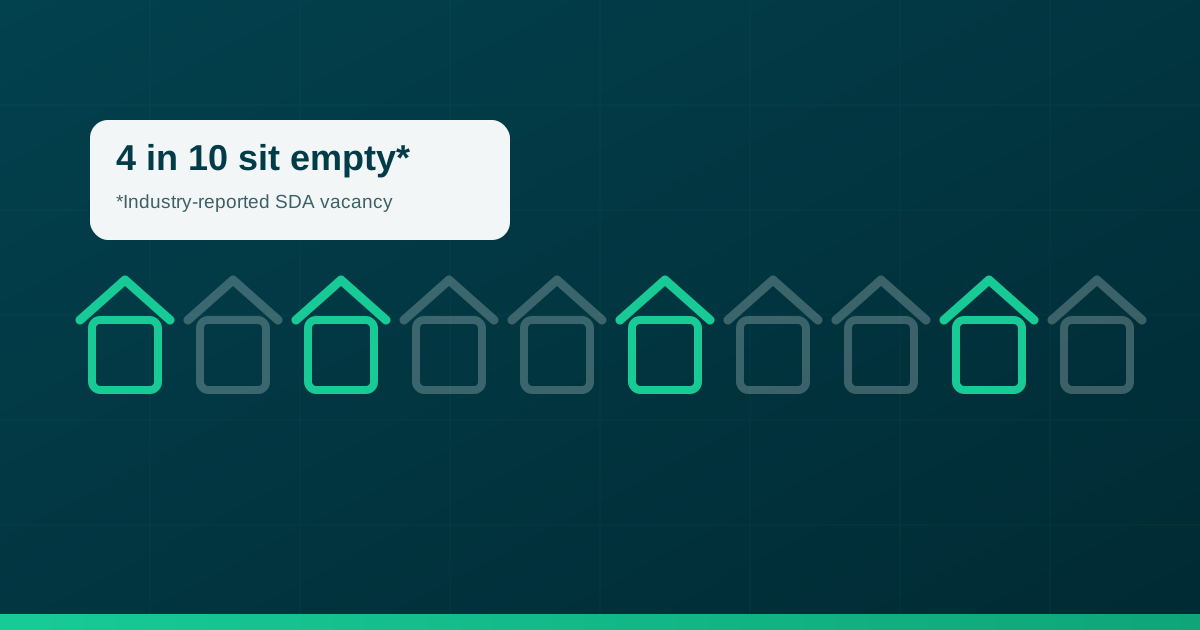
If you own an SDA-ready home that’s sitting empty, the first thing to know is that you’re not doing anything wrong — and you’re far from alone. Industry reporting has put national SDA vacancy above 40%, which is a remarkable number for housing that was purpose-built for people actively looking for somewhere to live.
So why does a market with genuine demand produce so many dark houses?
Location and demand don’t always meet
SDA development followed incentives, and incentives don’t always follow participants. Some regions ended up with clusters of similar homes competing for the same small pool of local participants, while other areas have participants waiting with nothing suitable nearby. A beautiful home in the wrong suburb can wait a long time.
Some design categories are oversupplied
The four SDA design categories — Improved Liveability, Fully Accessible, Robust, and High Physical Support — don’t experience equal demand everywhere. In some markets, certain categories were built well ahead of local need. If your home’s category is common in your area, your provider is fishing in a smaller pond than the headline demand figures suggest.
Matching is slow because it should be
This is the part worth defending: placing someone in long-term specialist housing is a serious decision involving the participant, their family, support coordinators, providers and funding approvals. Rushing it produces bad outcomes for everyone. The system is careful by design — which means owners need a plan for the months that carefulness takes.
Empty homes market themselves badly
A listing with photos of unfurnished rooms competes poorly against an active, furnished home — and most SDA vacancies get surprisingly little marketing at all. Participants and coordinators often choose between a handful of options they can actually visit and picture living in.
What owners can actually do
You can’t change regional supply, but you can change what your home does during the wait. Funded short stays — STA, respite, MTA — put the home to work, keep it furnished and alive for viewings, and even function as trial stays that help your provider fill the home permanently. We’ve written about what an empty home really costs — the flip side is that the vacancy period can fund itself if it’s structured properly with your provider.
Start with the two-minute income estimate to see what your home’s wait could be worth.
FAQ
Why are so many SDA properties vacant?
The main drivers are location mismatch between where homes were built and where participants want to live, oversupply in some design categories, the deliberately careful participant-matching process, and limited marketing of individual vacancies.
Is high SDA vacancy a reason not to invest?
It's a reason to plan for the vacancy period rather than assume instant tenancy. Owners who budget for the search window — and put the home to work during it — are in a very different position from those caught by surprise.
What could your vacant weeks be worth?
Two minutes, no obligation — an indicative income range for your SDA-ready home.
Get your income estimateGeneral information only — not financial, tax or NDIS advice. Rules and price arrangements change; check current NDIS guidance or speak with your provider.