SDA Design Categories Explained Without the Jargon
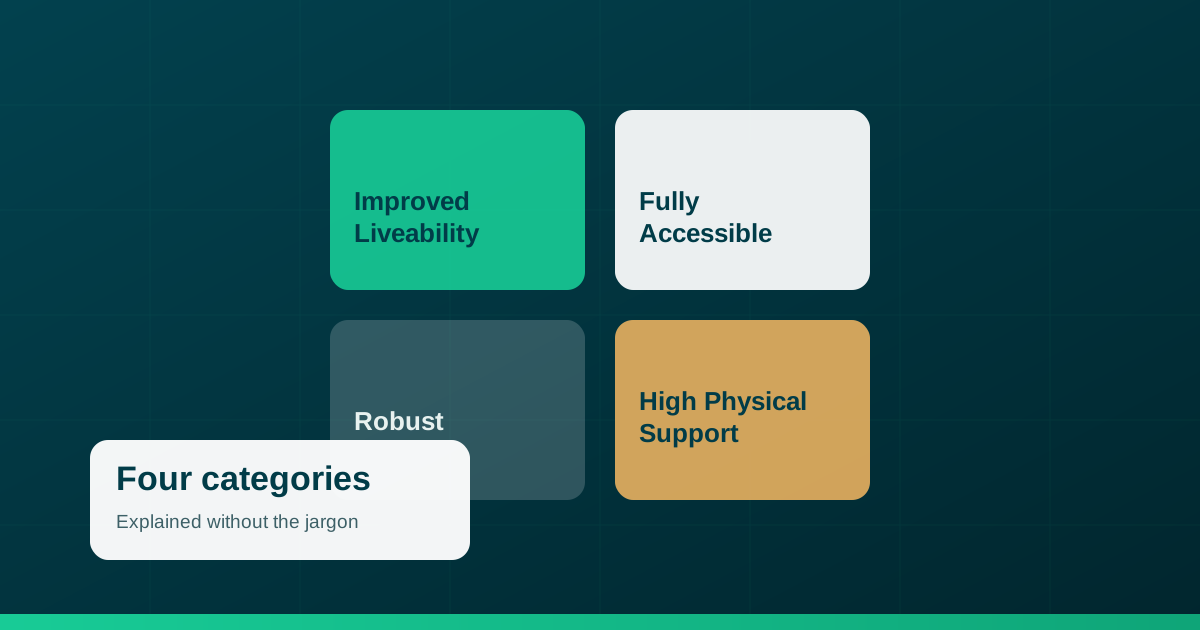
Every SDA conversation eventually collides with the four design categories, usually delivered as acronyms with no explanation. Here’s what they actually mean — for the person living in the home, and for the person who owns it.
Improved Liveability
Homes designed for people with sensory, intellectual or cognitive disability: better sightlines, logical layouts, good natural light, reduced trip hazards, and design that makes wayfinding intuitive. Physically they can look close to a conventional home — the intelligence is in the planning.
Fully Accessible
Designed for significant physical disability: level entry, wider doorways and corridors, bathrooms usable seated, kitchens with clearance and reachable benches. The wheelchair works everywhere in the home, not just at the front door.
Robust
Designed for residents who benefit from a very durable, low-stimulation environment: reinforced walls and fittings, secure outdoor space, sound reduction, and layouts that reduce points of friction. Done well, a Robust home doesn’t feel institutional — it feels calm and solid.
High Physical Support
The most specialised category, for people with significant functional impairment: everything in Fully Accessible plus provisions like ceiling hoists (or the structure to fit them), emergency backup power for equipment that can’t lose supply, clinical-grade bathroom setups and home-automation readiness. These homes carry the most demanding specification — and serve the participants with the fewest alternatives.
Why the category matters for owners
Your category determines who your home can serve, which shapes both your provider’s placement pool and your short-stay income potential during vacancy. High Physical Support homes, for instance, serve guests that almost no mainstream accommodation can — hoist users have very few genuine short-stay options anywhere. Category also drives vacancy dynamics: a category oversupplied in your suburb means a longer search, which makes a plan for the vacancy period more important, not less.
If you’re not sure how your home’s category positions it locally, that’s part of what our property assessment covers — no obligation, and useful information even if you never host a stay.
FAQ
What are the four SDA design categories?
Improved Liveability, Fully Accessible, Robust, and High Physical Support — each specifying a different set of design requirements matched to different participant needs.
Which SDA design category is most in demand?
It varies by region. High Physical Support homes are the most specialised and often the scarcest, but local supply and participant demographics decide what's actually needed in any suburb — worth checking before building or buying.
Looking for a genuinely accessible stay?
Purpose-built SDA homes available for STA, respite and MTA stays.
Check availabilityGeneral information only — not financial, tax or NDIS advice. Rules and price arrangements change; check current NDIS guidance or speak with your provider.