How STA Funding Works: A Support Coordinator's Checklist
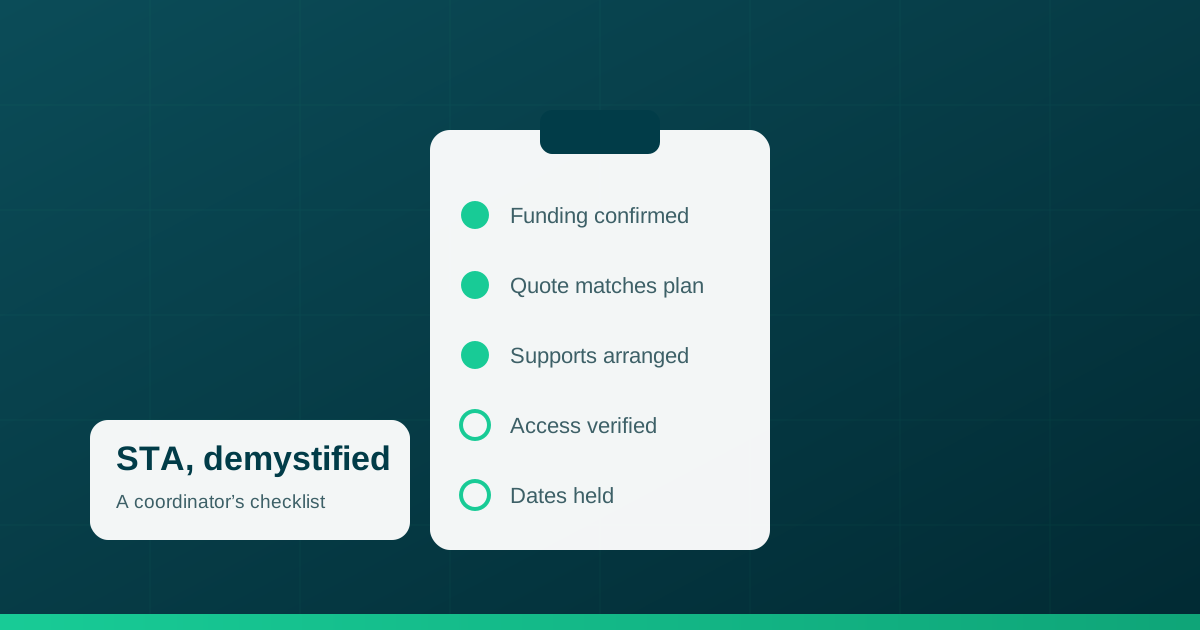
Short Term Accommodation is one of the most useful supports in a plan — and one of the most under-used, often because the booking process feels murkier than it should. This is the practical version, written from the accommodation side of the desk.
What STA is for
STA funds short stays away from a participant’s usual home — a break for the participant, respite for carers, or a purposeful stay like trialling independence or experiencing a potential long-term home. Stays are typically short blocks rather than open-ended, and the funding generally wraps the stay and its associated supports together. The exact mechanics depend on the participant’s plan and current NDIS arrangements, so treat the plan as the source of truth and the provider’s quote as the thing that has to match it.
How the money side usually runs
In practice the flow looks like this: you identify the need and the dates, request a quote from the accommodation provider, check it against the participant’s budget and management type (agency, plan or self-managed), and confirm supports for the stay — who’s providing personal care, whether a support worker travels with the participant, and where they sleep. Good providers make the quote legible: what’s included, what isn’t, and what happens if dates shift.
The checklist that saves stays
Before you book, confirm in writing that the accessibility claims are real and specific: not “wheelchair friendly” but level entry, doorway widths, bathroom hoist or track type, bed height, backup power if equipment depends on it. Then: who does personal care during the stay; is there a support-worker room if one’s needed; what’s the cancellation position; and does the home’s environment suit the participant — sensory considerations count as much as ramps.
We built our properties page to answer those questions per home rather than in generalities, because purpose-built SDA homes are a different proposition from retrofitted units — the features coordinators usually have to fight for are the baseline here.
When the dates are close
Late requests happen — hospital discharges and carer emergencies don’t wait for planning cycles. If you’re working on short notice, talk to us directly: the calendar shifts more than the listings suggest, and an honest “no, but here’s an alternative” beats a slow maybe.
FAQ
What does STA funding typically cover?
Short Term Accommodation generally covers the stay itself along with associated supports — accommodation, and depending on the arrangement, personal care, food and activities for the funded period. Always check the participant's plan and current NDIS guidance for specifics.
How far in advance should an STA stay be booked?
Accessible properties are scarce, and homes with features like ceiling hoists or High Physical Support design book out first — especially over school holidays. Earlier is always safer, and quotes can usually be held while funding is confirmed.
Looking for a genuinely accessible stay?
Purpose-built SDA homes available for STA, respite and MTA stays.
Check availabilityGeneral information only — not financial, tax or NDIS advice. Rules and price arrangements change; check current NDIS guidance or speak with your provider.